
Kenya's electric motorcycle story is told per kilometre and in registration counts. On the back of a Roam bike and at the hub, it reads very differently. A rider earning 530 shillings a day cannot spend four of them waiting for a battery to charge.

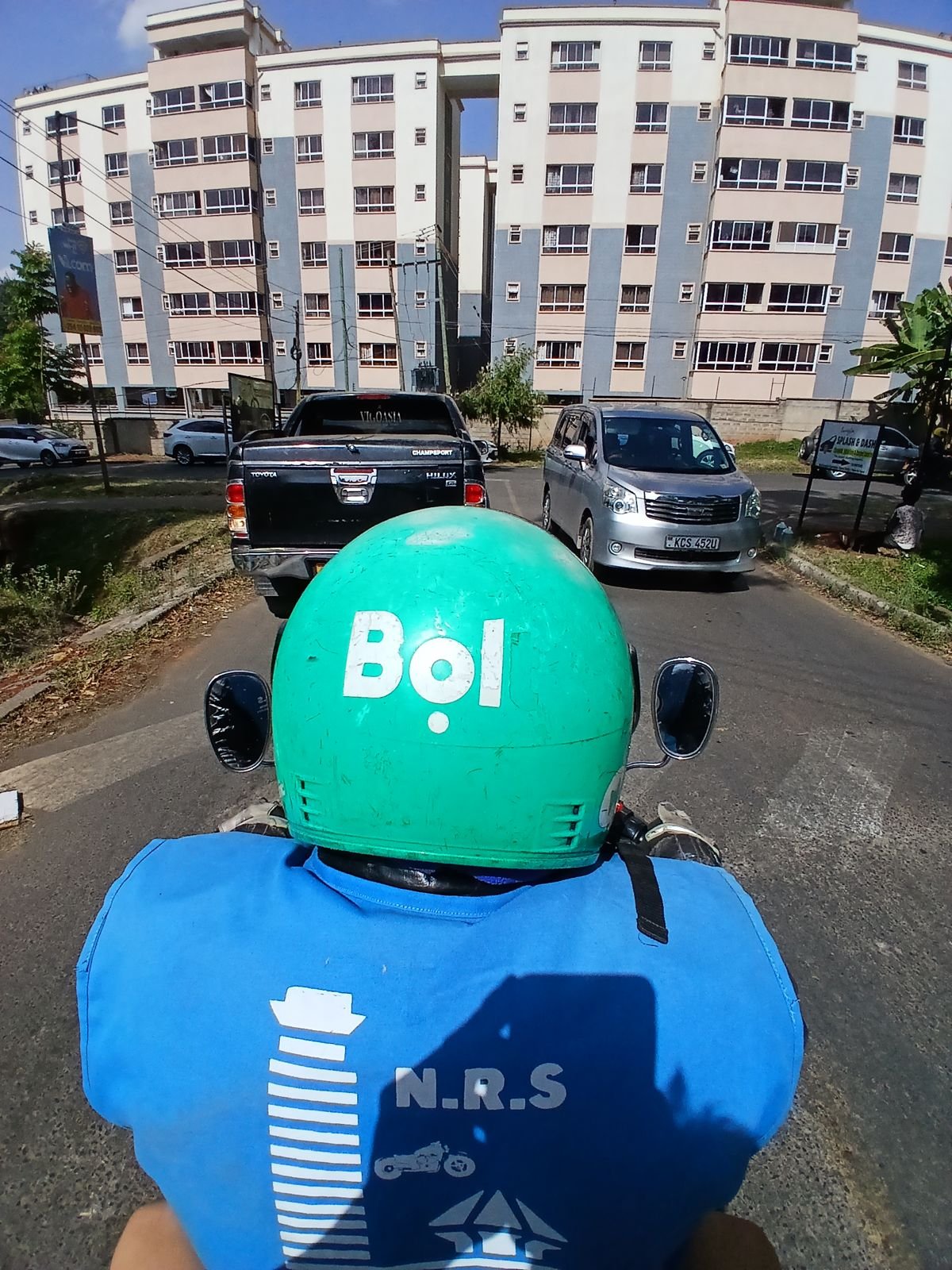
The first thing I noticed on the back of an electric boda boda in Nairobi this January was that I could hear the rider. On a petrol motorcycle any conversation dies under the engine and the exhaust, whereas on an electric one you can ask a question at a junction and get an answer before the traffic moves. The second thing came later that week at a Roam hub, where riders lay across their seats in the middle of the working day, waiting for batteries to charge during hours they would normally spend carrying passengers.
In January and February 2026 I interviewed seventeen people in Nairobi for my research on electric motorcycle transitions in Kenya: ten Roam riders, two petrol riders, three mechanics, a sales agent for the asset financier M-KOPA, and Romain from Roam's leadership team. I came with a question list built around upfront prices, loan terms and range anxiety, since that is where most of the policy conversation on e-mobility in Kenya sits, and where most of my own earlier work on financing had been. The riders answered those questions patiently and then, unprompted and often with some frustration, steered the conversation back to something my list had barely covered, which was time.
That shift has stayed with me since I returned to Delft. A transition that looks settled on a spreadsheet of shillings per kilometre looks much less settled from the seat of a parked bike at a charging hub at ten in the morning, and the gap between those two views is, I think, where the next phase of Kenya's electric boda boda story will be decided.
The case for electric boda bodas is almost always made per kilometre. In a Citizen Digital segment on the Nairobi assembler eWaka, co-founder Jimmy Tune put it plainly: "the total cost of ownership today is cheaper on an EV than a petrol bike." The riders I spoke with largely agree, and Georg, who rode petrol for years before switching, was emphatic: "I'm not saying this for me to market Roam, but I'm honest to everyone... with the electric bike, you save more." Registrations follow the same arithmetic, with 25,277 electric motorcycles among the 168,286 motorcycles registered in Kenya in 2025, roughly one in seven.
The arithmetic looks different once it is done per hour. Francis pays 530 shillings every day for two years to own his bike, and if he stops paying, "they will come and take their bike." A daily repayment of that kind has to be earned in the hours when passengers are on the road, which in Nairobi means the morning rush. Georg described how that window collides with the charging cycle:
"From five to nine, there's around three to four hours... After that, I have to go to the Roam hub and sit down and wait for around three and four hours for my \[batteries\] to be charged. That's waiting, wasting a lot of time."
When a rental battery is in stock, Francis told me, "it's about 10 seconds, you exchange, and you go." When it is not, those ten seconds become an afternoon. Enos, who works more than twelve hours a day and could do thirty trips "if I'm able to swap batteries in time," waits up to four hours "because so many people are scrambling for all these batteries," and he was candid about what that does to him: "it absorbs my morale, morale goes down. I cannot work as I woke up." Emmanuel summarised the problem in words that came up in almost every interview, "for boda boda riders, time is actually money," and Alex, asked what petrol riders still have over him, did not mention price, range or reliability: "The only advantage they have from us is they don't wait for batteries."

The waiting is, in part, a symptom of success. Emmanuel switched early, after doing what he called his own research, and remembered a time when rentals were easy to come by: "there were a lot of charging stations. Not a lot at that time, but they were available, and the bikes were not as much as right now on the roads. Getting access to a rental battery or a loaner battery was quite easy." He paused before adding, "That time, now it's different. Now it's quite hectic." Every new rider who joins the network makes the bike more familiar to the next one, and every new rider also draws on the same pool of charged batteries at the same hubs during the same morning hours.
Romain described the supply side of that squeeze in unusual detail. A shortage of battery stock had led Roam to sell new bikes with a single battery rather than two, which pushed more riders onto rentals precisely as the rental pool was stretched. Adding batteries alone would not solve it either, because "if we don't have the charging points, then you cannot charge them, and that's useless." When I spoke to him, a container was due the following week, which he expected would add "at least 50 battery or 70 battery in the network." Fifty to seventy batteries is a meaningful injection for a single operator, and it is also a reminder of how thin the margin is between a network that feels abundant and one where a rider like Enos spends a third of his working day on a bench.
What turns waiting from an inconvenience into a cost is the way these bikes are paid for. Romain estimated that "98% of new boda boda will go to a financier," since few riders have the cash unless family support them or they have "sold a piece of land." Terry, who sells electric bikes for M-KOPA across five brands, walked me through the terms: a deposit, then a daily payment over two years, with a three-day grace period for a missed payment. He was proud that "90% of the riders pay well on time, every day," and explained that agents try to match the bike to the rider's earnings, so that someone earning around 500 shillings a day is steered towards a bike costing about 300 a day rather than 500, because the rider "also need\[s\] money for food, money for basic needs."
That is careful lending, and it also means that a rider's day starts with a fixed sum owed before any income is counted. Francis described his target in exactly those terms: ten trips at around 50 shillings each, sometimes twelve or thirteen, "to make your target." Every hour spent at a hub is an hour in which that sum still has to be found, so the waiting falls hardest on the riders with the least slack. Repairs follow the same logic at a longer timescale. Georg told me about a friend whose Roam bike had stood idle for four months while he waited for an insurance claim on a faulty motor and controller, "really struggling on how to make money and how to feed his family." Because electric repairs remain concentrated with the manufacturer, riders have few places to turn for anything beyond brakes and tyres. James, who runs a workshop with seven mechanics, sees perhaps two to four electric bikes a day out of the ten to fifteen motorcycles that come through, and Francis was clear that he would not let "anybody" handle a mechanical fault on his Roam.

The petrol riders I interviewed were not waiting for anything, and their reasons for staying put were mostly about distance and reach rather than price. Derro, who spends around 500 shillings a day on fuel, said an 80-kilometre range "is not enough" because "one day you do more than 100," and his conditions for switching were concrete: a rise in the petrol price, fuel becoming "hard to get, and hard to buy," or someone else covering the cost, since "if they give me the bike right, I'll do. If I'm the one going to buy..." Mike, who has ridden for seven years, was far more hostile and asked that whoever brought electric motorcycles to Nairobi "kindly, please take them off the road." His complaint was not about the motor but about newcomers entering the trade on financed bikes without licences or training, and about brakes he considered unsuited to Nairobi traffic, with a plea to manufacturers to "kindly consider" the brake layout riders are used to.
The friction runs both ways. Alex, riding electric through a ride-hailing app, said petrol riders in the CBD "don't like the electric motorbike" and explained the tension in commercial rather than technical terms: "For us, we don't wait for customers. They call us," and "they don't like us because we are cheaper." The irony was not lost on me, since the same rider who no longer waits at a stage for passengers now waits at a hub for batteries. In both cases the scarce resource is the rider's hour, and the technology shifts where that hour is spent rather than whether it is spent.

The eWaka bike in the Citizen Digital segment has a fuel tank that holds nothing, with the charging port where the filler cap would be, because, as Tune explains, "the design is meant to mimic what people are used to from a form perspective." Hargadon and Douglas (2001) called this robust design in their account of how Edison made the electric light resemble the gas lamp it replaced, so that a new technology could enter a market organised around the old one. Kenyan e-motorcycles have done this well at the level of the object, which looks, rides and is financed much like the petrol bike riders already know. What the empty tank cannot imitate is the system behind it, and Derro, a petrol rider with no plans to switch, put his finger on it when he explained why: "petrol stations are all over." The advantage of the incumbent regime, in the multi-level perspective's terms (Geels, 2002), lies less in the engine than in a refuelling network that already moves at the pace of a working day.
Roam's own team was open about where that pace breaks down. Romain explained that the first-generation home charger takes around five and a half hours for a full battery, which suits overnight charging but not a daytime top-up. "It's our fault as a company," he said. "We have been a bit slow to deploy more rental battery." He also observed that riders were "wasting, like, four hours of their prime time to wait. But they're still like, okay, they still do it," which he put down to a relaxed, hakuna matata outlook. I read the same scene differently, since riders who owe 530 shillings by evening have little choice but to wait, and Enos's falling morale suggests that what looks like patience from the hub manager's office is closer to a contractual obligation than a temperament.

Kenya's incentives so far have worked on the purchase price, through the import and excise duty exemptions Tune mentions and the removal of VAT on batteries, and the registration figures suggest this has worked. The next constraint on the transition is the hours between batteries, and it appears nowhere in the figures we use to judge progress. Romain argued that owning the battery gives riders "freedom" to "charge everywhere to go anywhere," which holds overnight at home, yet during the day a rider with one battery is tethered to the hub as tightly as any swapping customer. He was candid that the industry's answer is still unsettled, describing swapping as "so chaotic... It works. It's not ideal, but it works," and placing his hopes on a new battery that fast-charges from empty to full "in one hour and 20 minutes, instead of five hours." If that holds in daily use, it would cut Georg's three-and-a-half-hour break to something closer to a long lunch.
Three changes would treat time as the cost riders already know it to be. The first is to measure it, by reporting average waiting time per swap or top-up alongside registrations, so that a hub network that grows slower than the fleet shows up as a problem before it shows up as falling morale. The second is to direct the next round of support towards the things that shorten the wait, namely rental battery stock, fast chargers at existing hubs and grid connections at the sites where riders already gather, rather than only towards the price of the bike. The third is to make batteries and stations work across operators, so that a rider who is short of charge in the morning rush is not restricted to one company's hubs. None of these is new as an idea, and riders themselves suggested most of them, with Alex putting the whole agenda in a sentence: "Just improve on the rentals, add more rentals, and swap stations."
The quiet I noticed on that first ride is real, and it is one of the pleasures of an electric city. The riders lying across their seats at the hub were quiet as well, for less pleasant reasons, and if the transition is to hold beyond its early adopters, their hours deserve the same attention we have given their shillings.
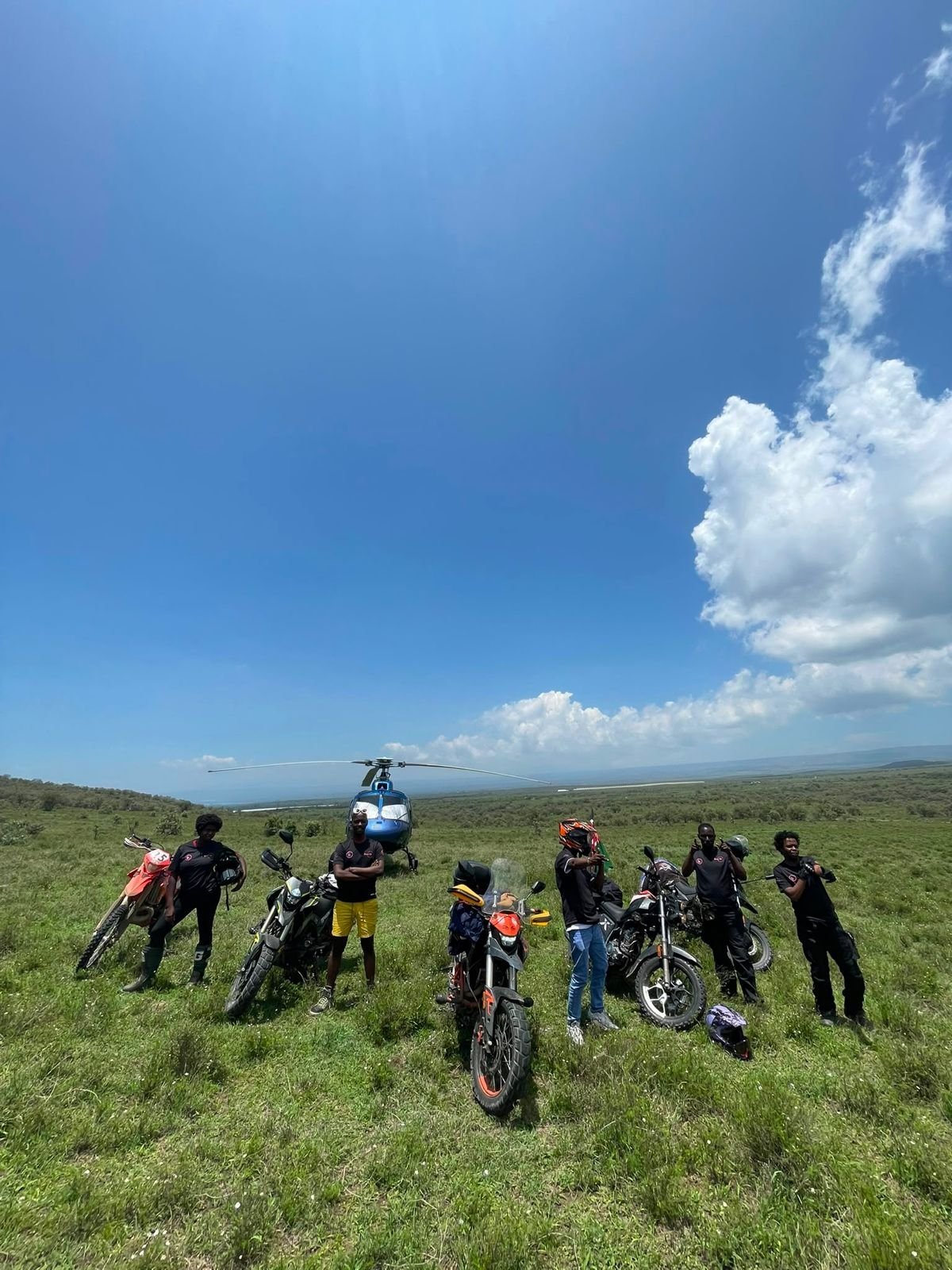
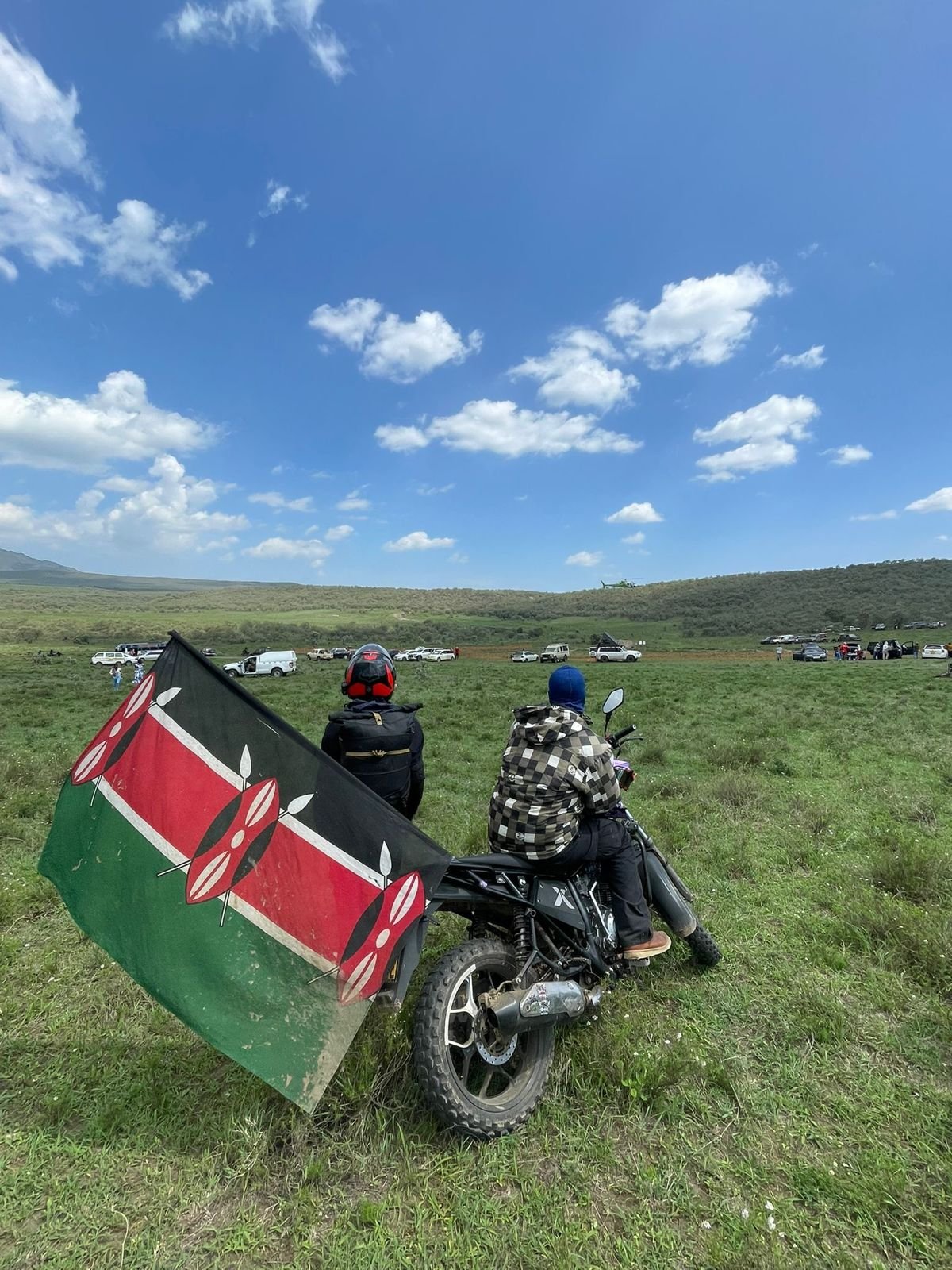
The research is one half of what Kenya gave me. The other half I owe to the riders, mechanics and friends who put me on the back of a bike, took me out to the Safari Rally and left me grinning in a Naivasha field — but that is a story for another time.
If this reads close to a decision you are weighing, we would like to hear about it. A short note is enough to start.
The Lab is an independent research team, not an advocacy organisation. We do not campaign, endorse products, or accept commissions where a finding is expected in advance. Where a partner's own theory of change is what needs testing, that is a legitimate engagement, and the Lab tests it honestly.